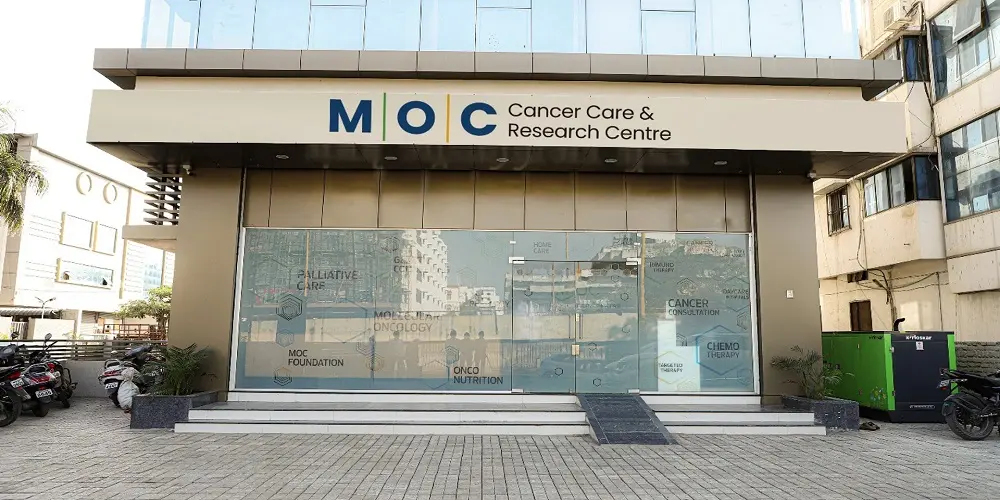
M | O | C Cancer Care & Research Centre, Gurugram
Gurgaon, IndiaAbout Hospital
M | O | C Cancer Care & Research Centre (MOC) is a specialized cancer day-care and semi-ICU enabled hospital in Gurugram. It offers affordable oncology treatments including chemotherapy, immunotherapy, targeted therapies, and supportive services like genetic counseling, physiotherapy, onco-nutrition, and palliative care. The Gurugram branch is part of a larger MOC network expanding in Delhi NCR, focusing on community-centric, multidisciplinary oncology care with cutting-edge diagnostics and personalized treatment planning.
Location
Full Address: Plot 297, Sector 29, Gurugram, Haryana 122009
Nearest Airport: Indira Gandhi International Airport, Delhi
Nearest Station: Gurugram Railway Station
Nearest Hotels:
- Lemon Tree Premier, Udyog Vihar, Gurugram
- The Westin Gurgaon, New Delhi
- Trident Gurgaon
Specialities
Top 5 Surgical/Oncology Specialities
Medical Oncology / Hemato-Oncology: This is the core specialty at MOC Gurugram. Under Dr. Rakesh Kumar Sharma (MD, DM), the centre manages both solid tumors (breast, lung, prostate, etc.) and hematologic malignancies (leukemia, lymphoma). They deliver systemic therapy (chemotherapy, immunotherapy, targeted therapy) tailored to molecular profiles, in collaboration with diagnostics and genomic facilities.
Molecular Oncology / Precision Oncology: MOC incorporates molecular diagnostics, genetic testing, biomarker analysis to guide targeted therapy choices. This enables personalized regimens based on the genetic alterations in cancer cells. This specialty is critical in modern cancer care to improve efficacy and reduce side effects.
Radiation Oncology: Although the Gurugram day-care centre may not directly host full radiation therapy, MOC’s model likely collaborates with radiation oncology units or refers patients within their network, ensuring that radiotherapy is integrated into treatment plans when needed (e.g. for solid tumors, head & neck, prostate, etc.).
Surgical Oncology: For cancers where surgical resection is essential (breast, colorectal, head & neck, gynecologic, urologic cancers), MOC typically coordinates with surgical oncology teams in partner hospitals. The oncologist’s plan integrates surgery with adjuvant or neoadjuvant therapies.
Supportive Oncology / Palliative Care: MOC emphasises not just active cancer treatment, but supportive care: palliative care, nutritional support, symptom management, physiotherapy, wellness, psychosocial support.
Other Specialities
- Genetic / Genomic Counselling
- Onco-Pathology
- Oncology Pharmacy
- Psycho-Oncology
- Onco-Nutrition
- Home Healthcare
- Clinical Research
- Multidisciplinary Tumor Boards
Procedures Performed
- Chemotherapy / Infusion Therapy: MOC Gurugram has a 14‑bed chemotherapy infusion unit which administers cytotoxic chemotherapy for various solid and hematologic malignancies. Patients may receive single or multi‑agent chemotherapy regimens depending on cancer type, stage, body tolerance, comorbidities. MOC ensures staff trained in infusion safety, monitors for infusion reactions, and emergency handling mechanisms in place to manage side effects. Infusion protocols include dose calculation, supportive hydration, antiemetic premedication, securing venous access (PICC / port / peripheral), monitoring vitals, and post‑infusion observation. Frequent lab monitoring (CBC, biochemistry) is done before each cycle to adjust doses.
- Immunotherapy: MOC provides immune checkpoint inhibitors (e.g. PD‑1, PD-L1, CTLA‑4 inhibitors) and other immunomodulating agents as part of treatment regimens for appropriate cancers (e.g. lung cancer, melanoma, etc.). This modality enhances the patient’s own immune system to recognize and kill tumor cells. It might be combined with chemotherapy or used alone based on molecular markers. Immunotherapy requires careful monitoring for immune‑related adverse events (e.g. colitis, pneumonitis, endocrinopathies), and MOC’s facility likely has protocols and trained staff to detect and manage such events.
- Targeted Therapy: Based on molecular tests (gene panels, mutation profiling), MOC prescribes targeted agents (small molecule inhibitors, monoclonal antibodies, etc.) that act on specific pathways in cancer cells (e.g. EGFR, ALK, HER2, BRAF). This approach increases efficacy and reduces toxicity compared to non‑specific chemotherapy. MOC integrates molecular oncology to guide these choices. The procedure involves baseline molecular diagnostic testing, monitoring drug levels and toxicity, adjusting therapy when resistance emerges, and combining with other modalities when needed.
- Bone Marrow Aspiration / Biopsy: For hematologic malignancies (like leukemia, lymphoma, myeloma), MOC conducts bone marrow evaluation via aspiration and biopsy to assess marrow involvement, staging, cytogenetics, minimal residual disease (MRD). This is essential in diagnosis, treatment planning, and monitoring of hematologic cancers.
- Palliative Care: As part of its comprehensive care model, MOC offers palliative therapies aimed at improving quality of life, controlling pain, nausea, fatigue, and other cancer or treatment‑related symptoms. This may include analgesic regimens, supportive medications, nutritional interventions, psychosocial counseling, and end‑of‑life care.
Other Procedures
- Genetic Counseling
- Scalp Cooling for Hair Loss
- Lymphedema Management
- Home Nursing Support
- Second Opinion / Tumor Board
Doctors
Dr. Rakesh Kumar Sharma - Medical Oncologist / Hemato‑Oncologist
Designation: Consultant Cancer Care Physician (Medical Oncologist)
Experience / Notable credentials: Completed medical education from institutes such as PGIMER Chandigarh and AIIMS, New Delhi.
Facilities
- 14‑bed infusion / chemotherapy day care unit
- Semi‑ICU / emergency handling capacity
- Onco diagnostics & pathology laboratory
- Molecular oncology / biomarker testing lab
- Oncology pharmacy
- Genetic counseling unit
- Onco‑nutrition & dietetics
- Onco‑physiotherapy & rehabilitation
- Psycho Oncologic support & counseling
- Home healthcare services
- 2nd opinion / tumor board (MDT) facility
- Clinical research / trial support
- Scalp cooling (Paxman)
- Lymphedema management (Lymphapress)
Infrastructure
- Multiple infusion bays / treatment rooms
- Behavioral / counseling room
- Laboratory & molecular testing labs
- Pharmacy dispensing units
- Emergency / resuscitation area
- Waiting lounges & patient support spaces
- Administrative & medical records wing
- Adequate power backup / utilities
- Clean rooms & sterile areas
- Access ramps / mobility support for patients